
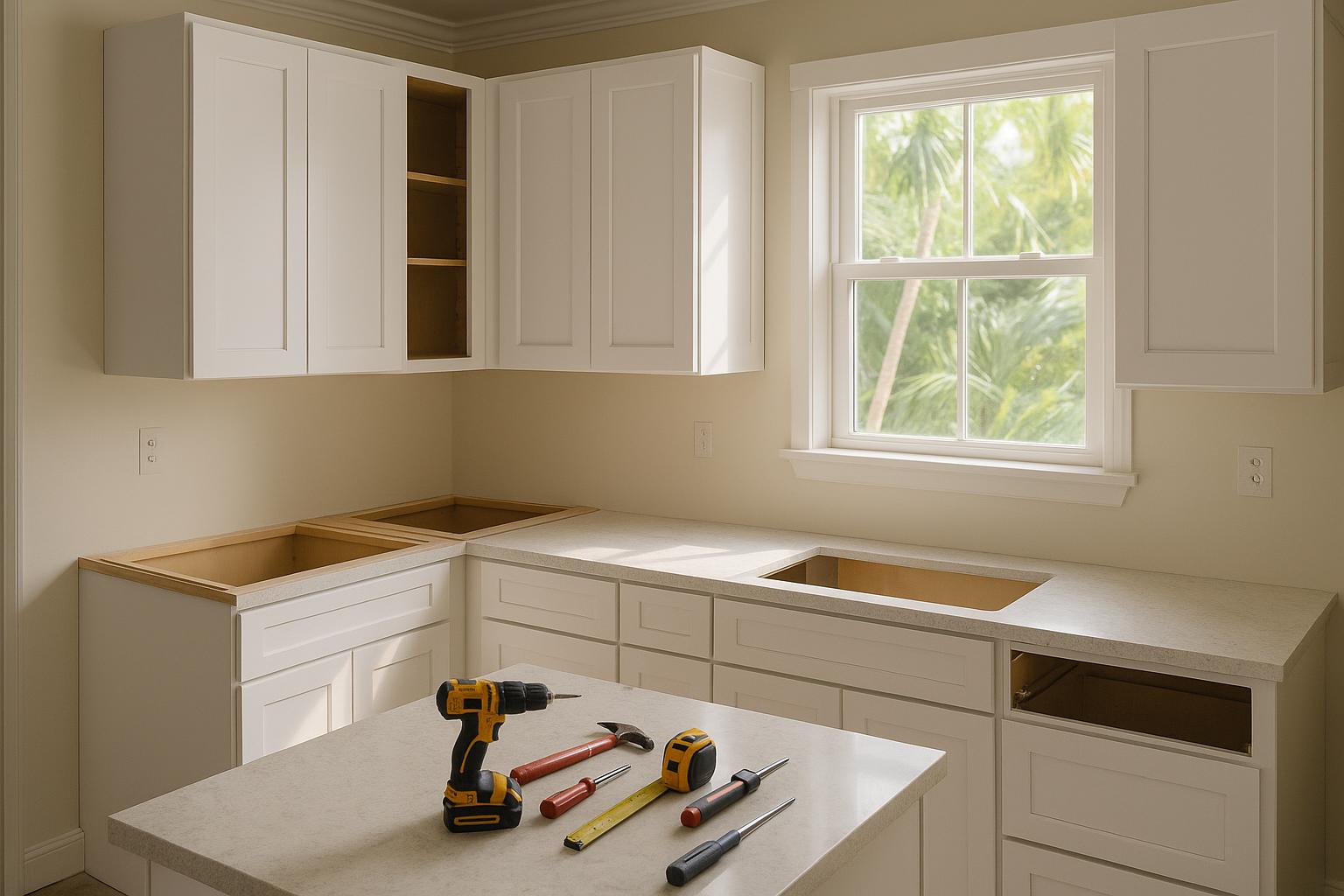
Why Planning Makes or Breaks a Kitchen Remodel
A kitchen remodel is exciting — new countertops, better storage, a layout that finally makes sense. But for homeowners in Homestead, jumping into demolition without a solid plan is one of the most expensive mistakes you can make. Unexpected plumbing issues, permit delays, and design regrets can turn a dream kitchen into a months-long headache.
The good news? Most of those problems are completely avoidable. Whether you're updating a 1990s builder-grade kitchen or doing a full gut renovation, the work you do before demo day determines how smoothly everything goes afterward. Here's what you need to think through before the hammers start swinging.
Set a Realistic Budget (and Build in a Buffer)
The number one question we hear from homeowners across Homestead and surrounding areas like Cutler Bay and Florida City is simple: How much will this cost?
The honest answer is that it depends on the scope of work, the materials you choose, and whether your kitchen needs structural or mechanical updates. But here's a rule of thumb that protects most homeowners:
- Decide on your maximum budget before you start shopping for finishes.
- Set aside 10–15% of that budget as a contingency fund for surprises behind walls — old wiring, outdated plumbing, or water damage you didn't know about.
- Prioritize where you spend. Cabinets and countertops typically eat up the largest share of a kitchen remodel budget, so that's where your biggest decisions will be.
Being upfront about your budget with your remodeling contractor isn't awkward — it's essential. A good contractor will help you make smart trade-offs so you get the most value without cutting corners where it matters.
Think About How You Actually Use Your Kitchen
Pinterest boards are great for inspiration, but your kitchen needs to work for your life. Before you finalize a layout, ask yourself these questions:
- Do you cook big family meals, or are you more of a quick-dinner household?
- Do your kids do homework at the kitchen counter?
- Do you entertain often and want an open layout that connects to your living space?
- How much pantry and cabinet storage do you actually need?
In Homestead, many homes were built with closed-off, galley-style kitchens that don't match how families live today. Opening up a wall, adding an island, or reconfiguring the work triangle between the stove, sink, and refrigerator can make a kitchen feel twice as large without adding a single square foot.
Understand Permits and Local Requirements
Here's something that catches a lot of homeowners off guard: most kitchen remodels in Homestead require permits. If you're moving plumbing, adding electrical circuits, or making structural changes, Miami-Dade County requires that the work be permitted and inspected.
Skipping permits might seem like a way to save time, but it can create serious problems when you try to sell your home or file an insurance claim. A reputable remodeling company will handle the permit process for you, making sure everything is up to code and properly documented.
What Typically Requires a Permit
- Moving or adding plumbing lines (relocating a sink, adding a dishwasher line)
- Electrical work beyond simple fixture swaps (new circuits, panel upgrades)
- Removing or modifying load-bearing walls
- Changes to gas lines if you're switching to a gas range
If your remodel is purely cosmetic — painting cabinets, replacing countertops in the same footprint, swapping hardware — you likely won't need a permit. But when in doubt, ask your contractor.
Choose Materials That Handle South Florida's Climate
Homestead's subtropical climate affects more than just your exterior. Kitchens deal with humidity, temperature swings from air conditioning, and the occasional power outage during hurricane season that lets moisture build up indoors.
Here are some material considerations specific to our area:
- Cabinets: Solid wood is beautiful but can warp in high humidity if not properly sealed. Plywood-box cabinets with quality finishes tend to hold up better than particleboard in South Florida homes.
- Countertops: Quartz is extremely popular in Homestead for good reason — it's non-porous, resists staining, and doesn't need the regular sealing that natural granite or marble requires.
- Backsplash: Porcelain and ceramic tile are durable, moisture-resistant, and easy to clean. They're also available in styles that mimic natural stone at a fraction of the cost.
- Hardware and fixtures: Salt air can corrode cheaper metals over time, even indoors. Look for stainless steel, brushed nickel, or coated finishes that resist tarnishing.
Plan for Life During the Remodel
A kitchen remodel in Homestead typically takes anywhere from three to eight weeks depending on the scope. That means weeks without a functioning kitchen. Homeowners who plan for this disruption handle it much better than those who don't.
Some practical tips:
- Set up a temporary kitchen station in another room with a microwave, mini fridge, and electric kettle.
- Stock up on easy-prep meals and disposable plates before work begins.
- If you have young children or pets, establish clear boundaries around the work zone for safety.
- Discuss the daily work schedule with your contractor so you know when crews will arrive and leave.
It's a temporary inconvenience for a permanent upgrade — but a little preparation makes those weeks far more manageable.
Pick the Right Remodeling Partner
Your contractor relationship is the single biggest factor in whether your kitchen remodel goes well. Here's what to look for when choosing a remodeling company in Homestead:
- Licensed and insured: Verify their license with Miami-Dade County. Don't take their word for it.
- Clear, written estimates: You should know exactly what's included and what's not before signing anything.
- Local references: Ask to see completed projects in Homestead, Naranja, Princeton, or Leisure City. A company that works in your area understands local building codes and common home construction styles.
- Communication style: Do they return calls promptly? Do they explain things clearly? The way a contractor communicates during the estimate phase is usually how they'll communicate during your project.
Ready to Start Planning?
A kitchen remodel is a big decision, but it doesn't have to be overwhelming. The key is doing your homework before the first tile is pulled up. When you walk into demo day with a clear budget, a functional layout plan, the right materials selected, and a contractor you trust, the process becomes something to look forward to — not stress over.
At Homestead Exterior Remodeling, we help homeowners across Homestead and the surrounding communities turn outdated kitchens into spaces they actually love using. If you're thinking about a kitchen remodel and want straightforward advice with no pressure, we'd love to talk through your project.